
The turn of the century
Have you ever considered the length of a century? Everyone knows a century marks one hundred years, yet how it would be to experience such an epic stretch of time, at least by human standards? Not many people have lived lives that span a century or more. My mother in law will turn 98 at the end of April, and that is getting close. She can recall a time when some homes still lacked electricity and indoor plumbing, and telephones were rare. Many people are lucky if they can make it into their 80’s. The longest documented living person was a French woman who made it to 122 years old. In my family, longevity seems to be a thing, but not to that extreme degree. My grandmother, and my grandfather’s two sisters all made it to 94. One of those great aunts totally defied expectations, as she suffered injury from rheumatic fever as a child and had rheumatoid arthritis. In those days there was really no treatment for that illness as there is today. Her joints were gnarled, especially her hands, but she was still able to sew and even made her own clothes. She walked with a cane and wore hearing aids but she lived a full life. My one uncle made it to 87, and the other one is now 91, both of them my mom’s brothers. My father only made it to his late 70’s, but neither he nor his mother took care of their health.
A century, or even close to that time frame, is quite long. Much can happen historically during and things can change to a great degree. When my arthritis suffering great aunt was born, travel was by horse and buggy and homes with electricity and running water were almost unheard of. When she passed away in the mid nineties, the internet was just beginning to get going, as were cell phones. While one cannot predict the future, it is possible to made an educated guess as to what things might be like. I’ve seen plenty of dystopian science fiction movies where technology becomes a destructive force, so it is easy to see what could happen, if things go very wrong. Those are worlds I would not want to live in. Hopefully there are enough people who also feel the way I do and will be able to prevent such a dark future.
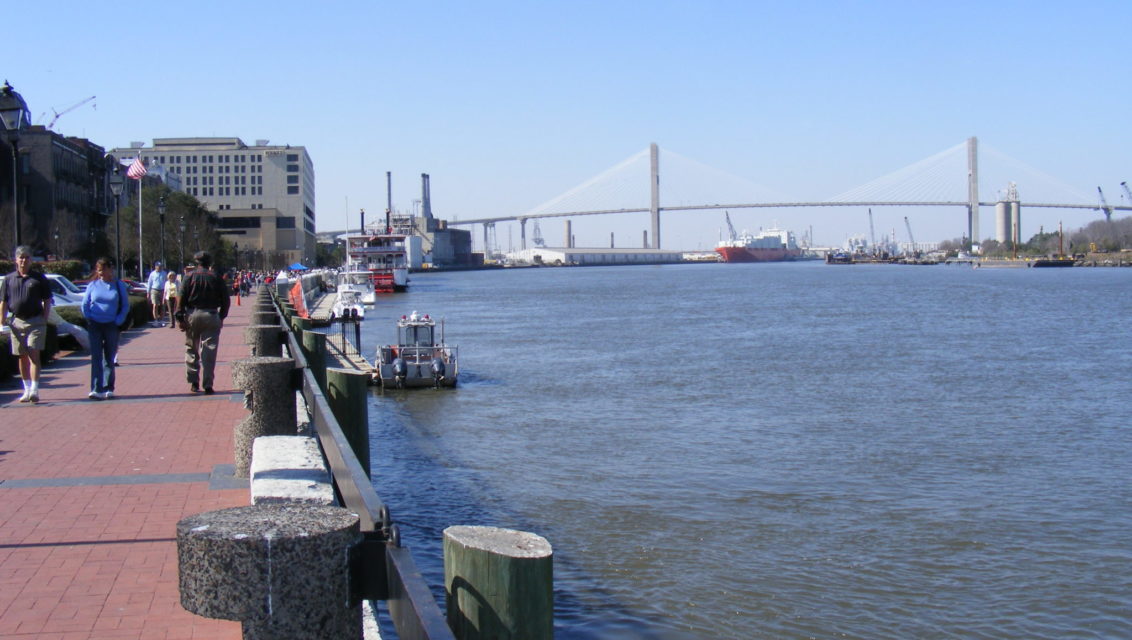
I am thinking about these sorts of time frames because of something I saw on the local news not long ago. This story was also repeated by other outlets in the following days. A reporter was interviewing someone who is with the state transportation department. The interview was about Baltimore’s metal and concrete behemoth that is now in the works. This man clarified a few things, noting that the design rendering is just to give a general idea and the final result may not look exactly like that. He also said something that I found to be rather preposterous. This new monster is expected to have an especially long life span, perhaps not that of the French woman, but of at least 100 years. If I was a betting person – and I could live another century or more, I’d bet against that. But suffice to say, such a service life can be claimed without repercussion, as very few people who are children now will be around to prove that estimate wrong. That would also likely be one of the longest running bets out there! While there are more than a few bridges out there that are well over one hundred years old, all of these are of tried and true designs, like truss bridges, suspension bridges and stone bridges. Some Roman bridges (and certain other Roman concrete structures) are still standing after two millennia. The Romans did not use any sort of metal reinforcements in their concrete, as is usually the case in modern construction. Therefore, there was nothing embedded within the structure that would rust and allow water to get in and create cracks. Cable stayed bridges with enormous concrete towers have little “track record” with regards to longevity, simply because most of these have been around less than fifty years. Even the Skyway monster, which helped lead the charge into this modern design, had structural problems not long after it was built. Those issues were successfully fixed, but I don’t doubt that bridge will be torn down and replaced in my lifetime. If I live as long as my grandmother did, I’ll likely see its third iteration. Which would not be a bad thing, as it is a damnable structure that is associated with way too many deaths. And, like Frankenstein’s monster, it probably ought to be destroyed for similar reasons.
Other fictional monsters like Count Dracula were able to master the secret to longevity, and indeed, immortality. Unless of course he found himself on the wrong end of a wooden stake or was exposed to sunlight. Falling into flowing water was another potentially lethal situation for a vampire, as was being decapitated. The Skyway monster is regularly exposed to sunlight and sea currents (perhaps salt water is a bane to a monster bridge, especially to the steel parts of it) and yet it still stands. A category five hurricane could deal it a heavy blow, but thankfully those only rarely come close to land.
A long time ago there was a horror movie with the tag line of “How do you kill something that is already dead?”. Sadly I can’t recall the movie, as it probably wasn’t all that great, but it may have been a zombie film. Perhaps a better question might be “How do you kill something that was never alive?” Longevity in horror and monster movies is generally bad. Godzilla is an ancient dinosaur who was reanimated by atomic radiation and is, at least in all the films, nearly immortal. If he does die, he will always return somehow. Vampires live on and on, as do zombies, as long as they are able to acquire blood and brains (respectively) and are not killed. What of a concrete and steel monster that will “live” on and on? Is that a good thing? Assuming that it can even be built to last a century or more? Suppose it becomes an evil monster like the Skyway? At least Godzilla eventually became a protector of humanity rather than a destroyer…